Gaurė
Tauragė district/region
Catholic church
Tauragė deanery, Telšiai diocese
| Master | Date | Instrument |
|---|---|---|
| unknown | 1808 | 1 manual, 15 (16) stops |
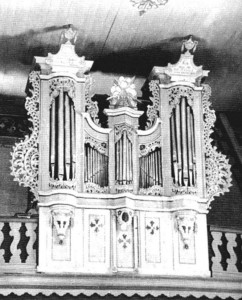 Church and organ burned in 1971. In 1992, the new Church of St. Michael the Archangel was built.
Console was on the left of organ. Two wedge-bellows.
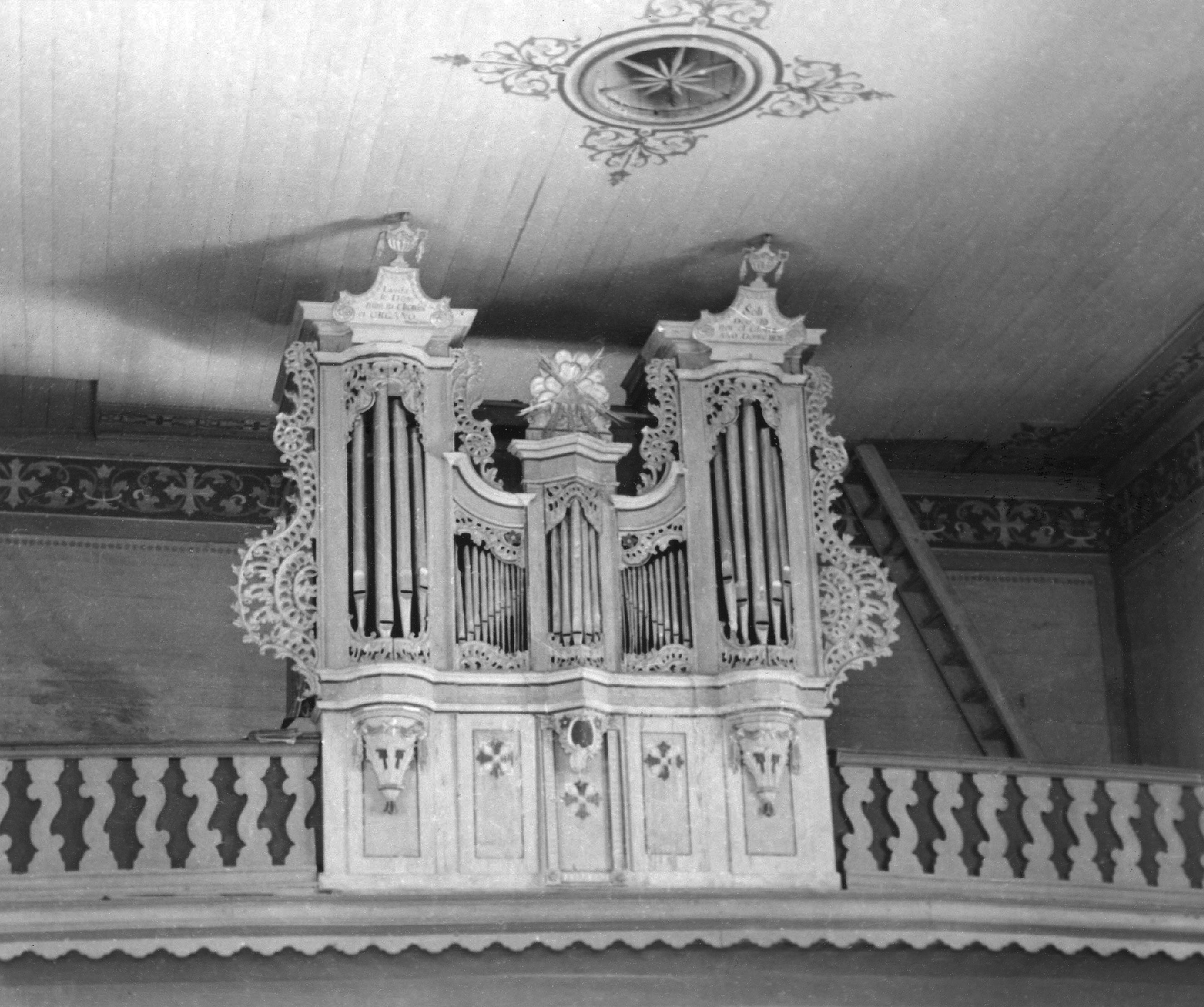
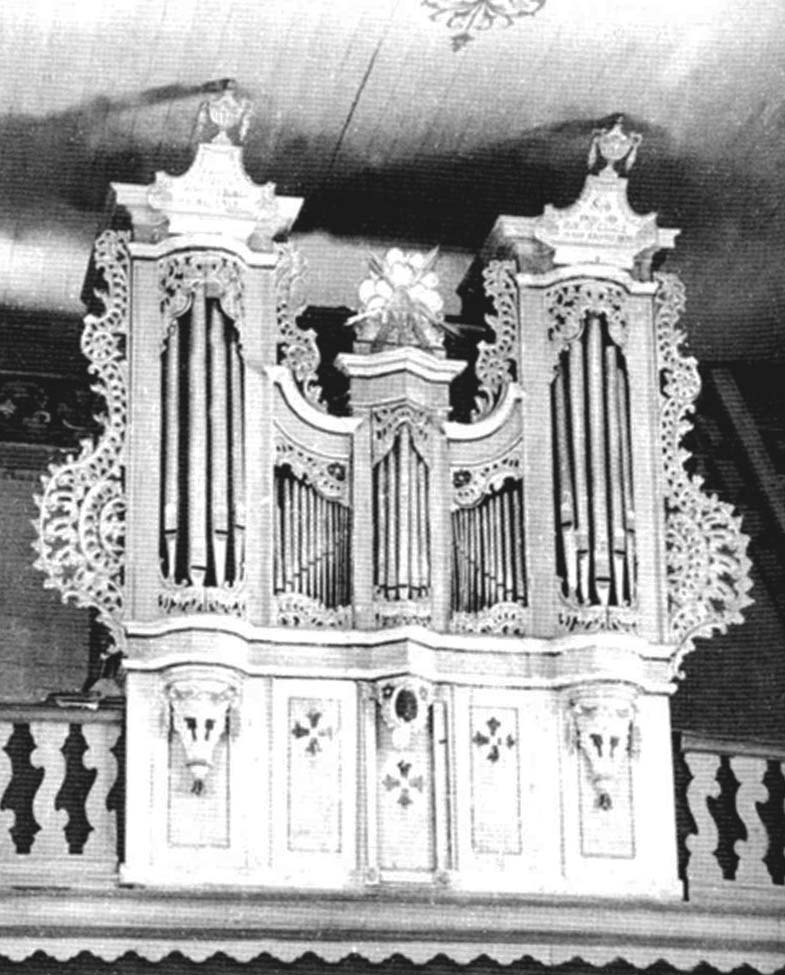
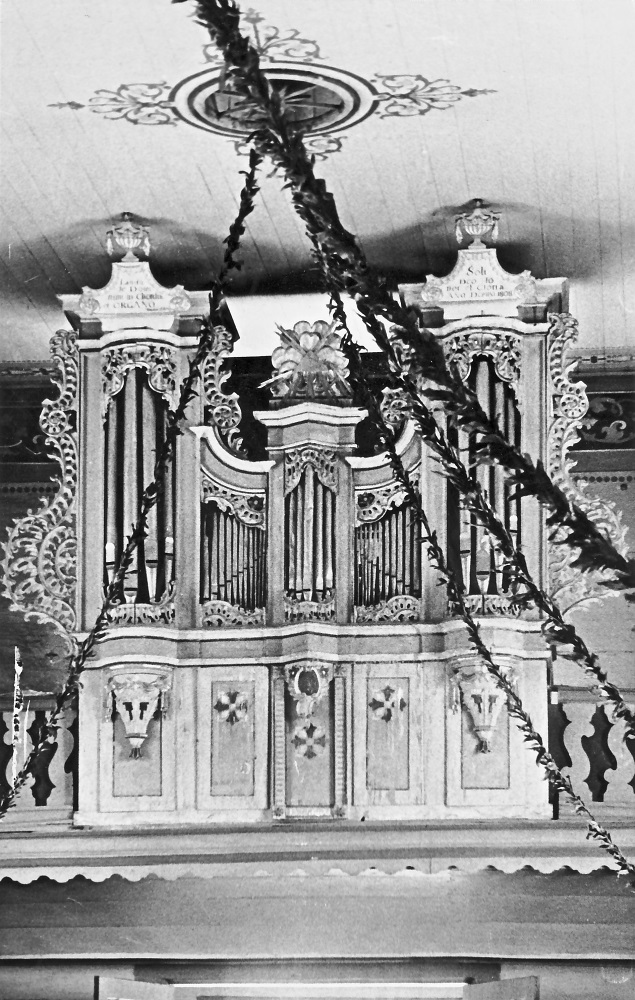
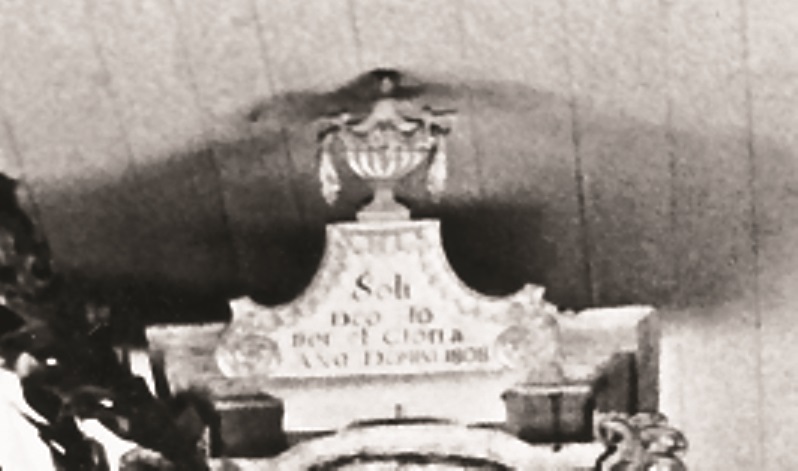
The record on the cartouche on the top of organ: Soli Deo Honor Et Gloria Anno Domini 1808. The façade composition and decoration was typical for organs in Samogitia, in the beginning of 19th c. (e.g., organs in Seda, Vidsodis, Vaiguva). Therefore, 1808 marks the year of building.
In 1841, the visitation mentioned the organ with 15 stops, painted and gilded [1], in the visitation of 1845 and inventory of 1873 the organ with 16 stops was mentioned [2]. Possibly, number 16 included the 16th drawstops knob for Cymbelstern.
The five-part composition represents the typical organ façades by Vilnius organ building school – 3 towers (2 high polygon side towers and triangle tower in the centre) are connected by 2 bent cells. The baroque composition of the façade was typical in the period of over 70 years; the oldest example is the organ in Prienai church (1767–1769) and the latest – in Kantaučiai (1815) and Eigirdžiai (1835–1836) churches [3].
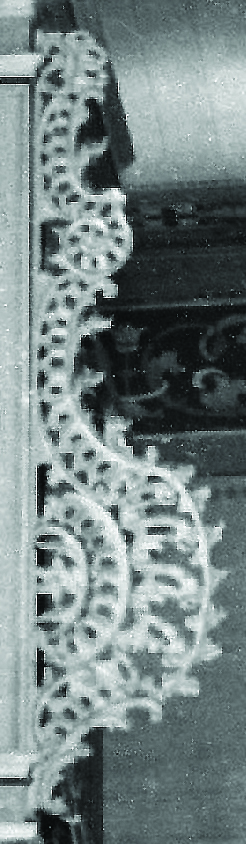
Gaurė organ was featured with refined rococo woodcarvings. The central decorative console considered to be a repetition of baroque console in the organ of Kėdainiai St. Joseph church. The ornamentation of façade cells and volute wings that adorned the façade sides was analogous to the iconography of organs in Trakai, Tverai, Seda, Joniškėlis, Vėžaičiai, Vaiguva, Notėnai, Vidsodis, Lieplaukė, Kantaučiai, Pivašiūnai, Lenas (Latvia) churches. The Eye of Providence in the central part of organ façade was common from 1780s to the beginning of the 19th c. For example, the Eye of Providence decorates the organs in Joniškėlis, Seda, Notėnai, Pivašiūnai, Dapšioniai, Vaiguva, Kantaučiai, Lenas (Latvia) churches. The bottom of side towers was decorated by consoles in the shape of vase (analogous consoles survived in the organs in Dapšioniai, Šeduva, Rozalimas, Pivašiūnai or Vidsodis churches).
[1] LVIA, f. 669, ap. 2, b. 253, l. 559.
[2] LVIA, f. 669, ap. 2, b. 267, l. 76; LVIA, f. 1671, ap. 4, b. 4, l. 199.
[3] Other typical examples: not survived organs in Batakiai, Gaurė, survived organs inKėdainiai St. Joseph (~1790), Kėdainiai St. George (~1760–1770), Staryja Vasilishki (~1770),Pivašiūnai (19th c. Beg.), Medininkai (18th c. 4th quarter),Rozalimas (1796), Notėnai (19th c. Beg.), Kriaunos (~1780), Skaudvilė (between 1797 and 1806), Panemunėlis (18th c. End), Joniškėlis (1803), Vidsodis (~1807), Vėžaičiai (1804), Tūbinės (19th c. 1st half).
Gaurė church archival documents: 1806 visitation (LVIA , f. 669, ap. 2, b. 221, l. 492); 1841 visitation (LVIA , f. 669, ap. 2, b. 253, l. 559); 1845 visitation (LVIA , f. 669, ap. 2, b. 267, l. 76); 1873 inventory (LVIA, f. 1671, ap. 4, b. 4, l. 199); 1896 visitation (LVIA , f. 669, ap. 3, b. 2573, l. 27).
Stoplist, 1968
| I manual (C–f”’) | |
| Bordun Principal Salicional Flauto major Octava Super octave Mixtura Trompeta |
16′ 8′ 8′ 8′ 4′ 2′ 1′ 8′ |
| II manual | |
| Bordun Jula Quinta Terz. |
8′ 4′ 3′ . |
| Pedals (C–c’) | |
| Principal Subbass |
8′ 16′ |
II/I, I/Ped.
Swellbox II man.
~1959–1960